

Employee Relations Strategy & Planning
Build Stronger Workplace Relationships Through a Proactive Employee Relations Strategy
Employee relations is the practice of managing the day-to-day relationship between employers and employees. It encompasses communication, leadership capability, conflict resolution, workplace conduct, employee engagement and the consistent application of workplace policies and obligations.
While industrial relations often focuses on collective employment issues such as enterprise bargaining, awards and union engagement, employee relations is concerned with the broader employment relationship and the workplace experiences that shape organisational culture and performance.
A well-designed employee relations strategy helps organisations reduce workplace disputes, improve employee experiences, strengthen leadership capability and create more productive, compliant workplaces, all of which has an impact on the productivity of an organisation.
At Mapien, we partner with organisations to develop practical, future-focused employee relations strategies that align people practices with business objectives and prepare organisations for the evolving world of work.
Why Employee Relations Strategy Matters
Workplace issues rarely become simpler or less costly over time.
Whether it’s inconsistent management practices, unresolved workplace conflict, employee complaints, conduct concerns or broader cultural challenges, the way organisations respond can significantly impact risk, productivity, engagement and reputation.
A proactive employee relations strategy helps organisations:
- Build positive and productive workplace relationships
- Create consistency in people management practices
- Improve communication and consultation processes
- Support leaders through difficult workplace situations
- Reduce the likelihood of formal grievances and disputes
- Minimise exposure to employment-related risk
- Strengthen employee trust and organisational culture
- Improve retention and workforce stability
The strongest employee relations outcomes are achieved when organisations move beyond reacting to issues and instead establish clear and proactive frameworks, processes and leadership capability that prevent problems from escalating.
Mapien's Employee Relations Strategy Framework
At Mapien, we believe effective employee relations management begins with understanding an organisation’s current state and creating a clear pathway to the desired future state.
Our approach engages senior leaders and key stakeholders to identify current challenges, assess organisational capability and establish priorities that support long-term success.
Through our structured employee relations strategy process, we help organisations:
- Assess existing employee relations strengths and risks
- Identify emerging workplace challenges
- Align people practices with organisational priorities
- Create practical implementation roadmaps
- Build leader capability and confidence
- Establish governance, accountability and measurement frameworks
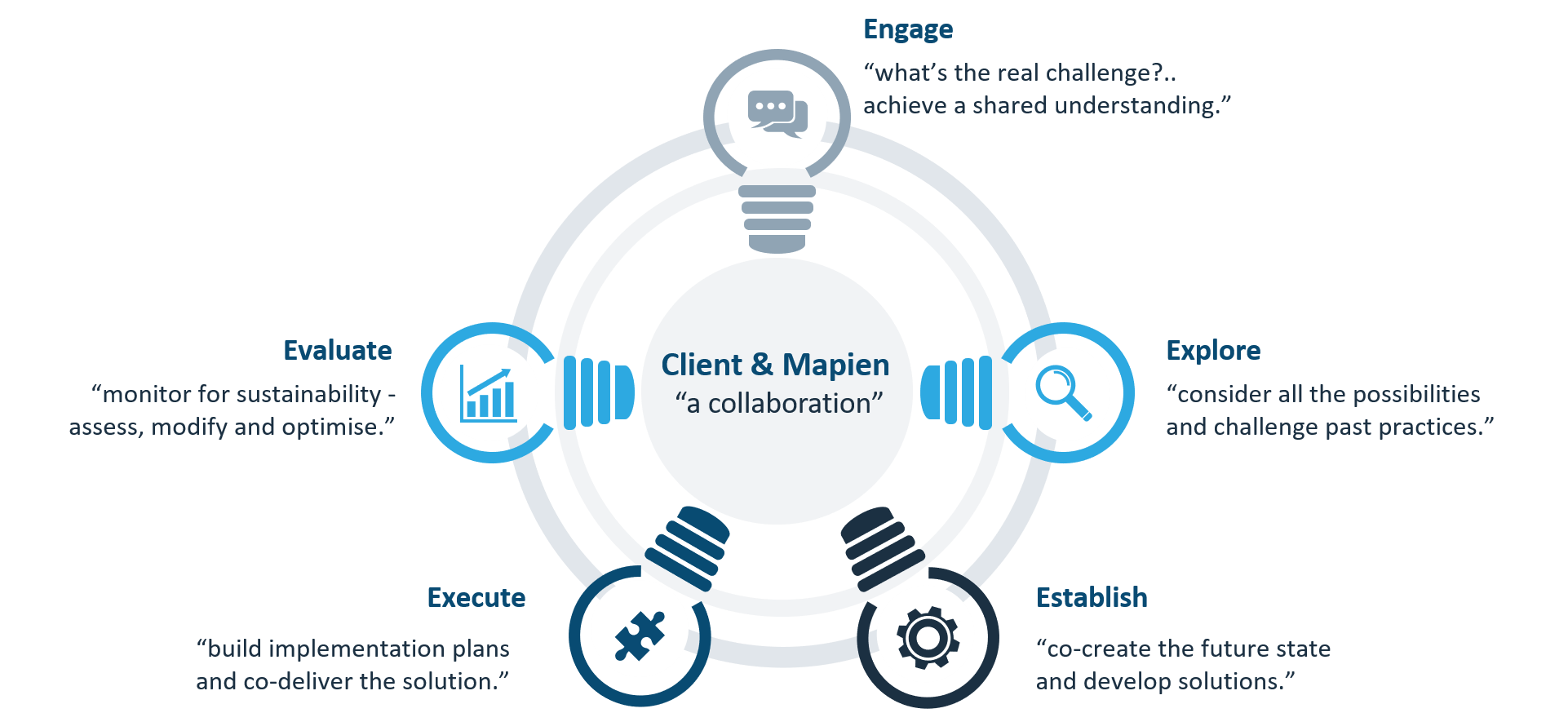
Mapien’s 5E model takes clients from understanding the real employee relations challenge through to developing, implementing and evaluating practical solutions that support the desired future state.
Not sure where your employee relations risks sit?
Our team can assess your current state and map out practical next steps.
Managing Employee Relations Day to Day
An effective employee relations strategy must translate into everyday workplace practices.
Managing employee relations successfully requires organisations to create clear processes, equip leaders with practical skills and ensure workplace issues are addressed consistently and fairly.
This often includes:
Supporting Managers and Leaders
Leaders are frequently required to manage difficult conversations, performance concerns, conduct issues and employee complaints. Providing timely access to specialist advice helps managers make informed decisions with confidence.
Ensuring Consistency Across the Organisation
Consistent application of policies, procedures and employment obligations reduces risk and helps employees feel they are being treated fairly and respectfully.
Resolving Issues Early
Many workplace concerns can be resolved before they escalate when organisations have clear escalation pathways, effective communication practices and access to experienced employee relations advisers.
Maintaining Documentation and Governance
Accurate documentation, sound decision-making processes and appropriate records help organisations manage employee relations issues fairly while protecting the business from future disputes.
Examples of Employee Relations in Practice
Employee relations touches almost every aspect of the employment relationship.
Common examples include:
- Managing workplace conflict and interpersonal disputes
- Addressing employee grievances and complaints
- Supporting disciplinary and conduct processes
- Assisting leaders with performance conversations
- Managing workplace change and consultation activities
- Developing communication and employee engagement strategies
- Improving manager capability and confidence
- Reviewing workplace policies and procedures
- Supporting organisational culture initiatives
- Resolving issues before they progress to external claims or proceedings
By taking a strategic approach, organisations can create positive employee relations while reducing the time, cost and disruption associated with workplace disputes.
A Trusted Partner for Ongoing Employee Relations Support
Many organisations require ongoing access to specialist employee relations expertise as workplace challenges emerge.
Mapien provides practical employee relations, HR and industrial relations advice that helps leaders confidently manage workplace matters while remaining focused on business priorities.
With access to experienced consultants across Australia, our clients benefit from:
- Practical, commercially focused advice
- Timely support when workplace issues arise
- Reduced uncertainty when managing people matters
- Improved leadership confidence
- More consistent decision making
- Faster issue resolution
- Reduced workplace risk
- Access to trusted specialist expertise whenever it is needed
Success is reflected in confident leaders, consistent people practices and workplace issues being addressed proactively before they escalate into formal disputes, claims or operational disruption.
Want ongoing employee relations support?
Get practical advice from Mapien’s employee relations consultants whenever workplace issues arise.
Key Team Members
Our Office Locations
Brisbane
Level 10, 340 Adelaide Street, Brisbane QLD 4000
PO Box 10399, Adelaide Street, Brisbane QLD 4000
FAQs
What is employee relations?
Employee relations refers to how an organisation manages the relationship between employers and employees. It includes communication, workplace conduct, conflict resolution, leadership support, employee engagement and the consistent application of workplace policies and practices.
What is the difference between employee relations and industrial relations?
Employee relations focuses on individual workplace relationships and day-to-day people management practices. Industrial relations typically deals with collective employment matters such as enterprise bargaining, awards, union involvement in the employment relationship and tribunal and commission processes. Both disciplines work together to support productive workplaces.
What does an employee relations strategy involve?
An employee relations strategy establishes the framework, processes and leadership capability needed to manage workplace relationships effectively. This may include governance, communication practices, leader development, conflict resolution processes, risk management and workplace culture initiatives.
How can businesses reduce workplace disputes before they escalate?
Early intervention is critical. Organisations can reduce disputes and costly investigations by providing leaders with appropriate training and support, applying policies consistently, encouraging communication, responding promptly to concerns and seeking specialist advice before issues become formal grievances or legal claims.
How does Mapien help organisations improve employee relations?
Mapien works with organisations to assess their current workplace environment, identify risks and opportunities, develop employee relations strategies and provide practical advice that helps leaders confidently manage workplace challenges now and into the future.